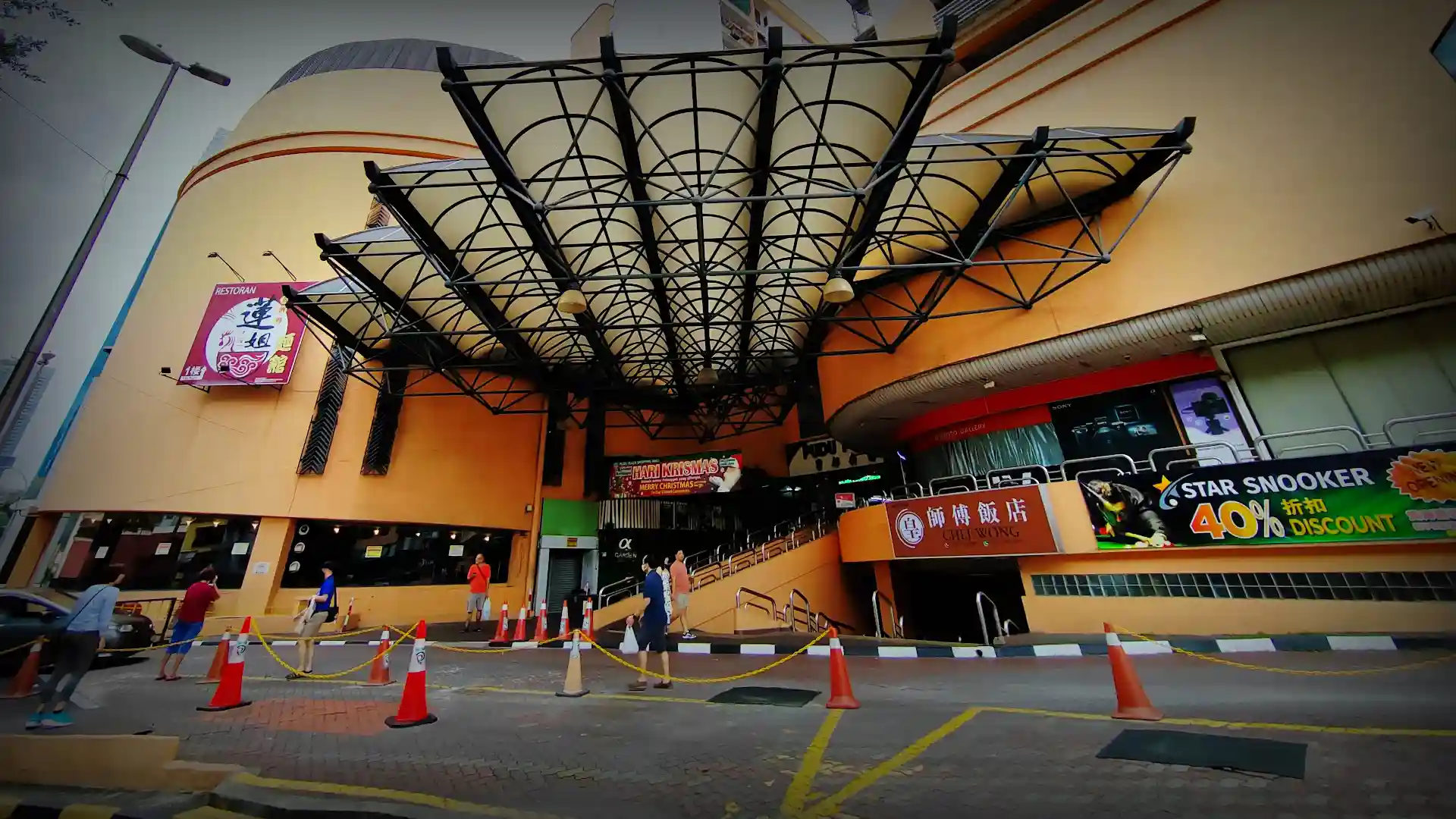
Pudu Plaza stands as a modest yet enduring shopping complex nestled in the heart of Pudu, one of Kuala Lumpur’s most historically rich and culturally vibrant neighbourhoods.
Located in a district that has witnessed the transformation of Malaysia’s capital from a colonial outpost to a modern metropolis, Pudu Plaza represents the traditional neighbourhood shopping centre model that has served local communities for decades.
Unlike the glittering mega-malls that dominate Kuala Lumpur’s retail landscape today, Pudu Plaza embodies the authentic, unpretentious character of old Kuala Lumpur, where practicality meets community convenience.
The shopping complex caters primarily to the surrounding residential neighbourhoods, offering essential goods and services rather than luxury brands or high-end entertainment.
This focus on community needs has allowed Pudu Plaza to maintain its relevance even as newer, larger shopping destinations have emerged across the Klang Valley.
For many long-time residents of Pudu, the plaza represents more than just a place to shop — it is a familiar landmark that has witnessed generations of families grow and change.
The Pudu Neighbourhood: A Historic Context
To understand Pudu Plaza’s significance, one must first appreciate the neighbourhood in which it stands.
Pudu is a ward of Kuala Lumpur located along the Federal Route 1, known as Pudu Road (Jalan Pudu in Malay).
During colonial rule, the area was known as Pudoh, and it has since evolved into one of the city’s most densely populated and commercially active districts.
The neighbourhood is strategically sandwiched between Bukit Bintang, Maluri, and Cheras, positioning it as a crucial link between Kuala Lumpur’s central business district and the eastern suburbs.
The neighbourhood’s character is defined by its bustling wet market — Pudu Market (Pasar Besar Pudu), one of the largest in Kuala Lumpur — and the nearby Jalan Pasar, where shops specialise in electronics components and devices.
This commercial heritage has shaped Pudu into a district where traditional trade coexists with modern commerce, creating a unique urban atmosphere that attracts both locals and visitors seeking authentic Kuala Lumpur experiences.
Location and Accessibility
Pudu Plaza benefits from its central location within the Pudu district, making it easily accessible to residents from the surrounding areas.
The complex is situated along major thoroughfares that connect various parts of Kuala Lumpur, ensuring steady foot traffic from shoppers going about their daily errands.
The proximity to Pudu Sentral bus terminal, once the main long-distance bus hub for Kuala Lumpur, has historically contributed to the plaza’s visibility and accessibility.
Retail Offerings and Tenant Mix
As a neighbourhood shopping complex, Pudu Plaza focuses on providing essential retail services that cater to daily needs rather than aspirational shopping experiences.
The tenant mix typically includes outlets that have proven essential to local communities over the years:
- Supermarkets and Groceries: Providing fresh produce, household essentials, and daily necessities for the surrounding residential communities.
- Food and Beverage Outlets: Local eateries, food courts, and cafes offering affordable meals and refreshments, reflecting the multicultural culinary heritage of Pudu.
- Service Businesses: Tailors, hair salons, barbers, laundromats, and repair shops that serve the practical needs of local residents.
- Health and Wellness: Pharmacies, traditional medicine shops, and wellness centres addressing community health needs.
- Electronics and Mobile Services: Reflecting Pudu’s reputation for electronics trade, with shops offering mobile phones, accessories, and repair services.
- Financial Services: Banks, money changers, and remittance services catering to the diverse population of the area.
This practical tenant mix has allowed Pudu Plaza to maintain a loyal customer base comprising residents who value convenience and affordability over the premium experiences offered by newer malls.
The complex serves as a one-stop destination for everyday essentials, saving residents trips to larger shopping centres for routine purchases.
Community Role and Social Significance
Beyond its retail function, Pudu Plaza plays an important role as a community gathering space.
In neighbourhoods like Pudu, where high-density residential developments create limited public spaces, shopping complexes often serve as de facto community centres where residents can gather, socialise, and conduct their daily activities.
The air-conditioned environment provides relief from Kuala Lumpur’s tropical heat, making the plaza a popular spot for elderly residents to pass time and for families to escape the midday sun.
The complex also reflects the multicultural character of Pudu, a neighbourhood that has historically been home to diverse communities including Chinese, Malay, and Indian residents.
This diversity is reflected in the types of shops, the food offerings, and the languages heard throughout the complex.
During festive seasons, Pudu Plaza often becomes a microcosm of Malaysian multicultural celebrations, with decorations and promotions marking Chinese New Year, Hari Raya, Deepavali, and Christmas.
The Evolution of Pudu’s Retail Landscape
The area surrounding Pudu has undergone significant transformation in recent decades, and these changes have inevitably affected local shopping complexes like Pudu Plaza.
The demolition of Pudu Prison and the development of Bukit Bintang City Centre (BBCC) have brought modern retail and entertainment offerings to the neighbourhood’s doorstep.
The BBCC development includes Mitsui Shopping Park LaLaport, a major Japanese lifestyle mall that represents the new generation of retail destinations.
These developments present both challenges and opportunities for older shopping complexes in Pudu.
On one hand, the increased foot traffic and improved infrastructure benefit all commercial establishments in the area. On the other hand, competition from newer, more modern retail spaces can draw customers away from traditional neighbourhood complexes.
However, Pudu Plaza’s focus on essential services and community needs provides a level of resilience against such competition, as there will always be demand for convenient, neighbourhood-level retail.
Architectural Character and Atmosphere
Pudu Plaza exemplifies the architectural style typical of Malaysian shopping complexes built in the late twentieth century.
The design prioritises functionality over aesthetics, with straightforward layouts that allow shoppers to navigate easily between different zones.
The interior spaces are designed to maximise retail efficiency rather than create impressive visual experiences, reflecting the complex’s role as a practical shopping destination rather than a lifestyle attraction.
The atmosphere within Pudu Plaza differs markedly from that of upscale malls.
Rather than polished marble floors and dramatic atriums, visitors encounter a more utilitarian environment that prioritises accessibility and convenience.
This unpretentious character has its own appeal, particularly among shoppers who feel more comfortable in familiar, down-to-earth settings than in the sometimes intimidating grandeur of mega-malls.
Challenges and Future Prospects
Like many older shopping complexes across Kuala Lumpur, Pudu Plaza faces challenges in maintaining relevance amidst rapidly evolving retail trends.
The rise of e-commerce has affected foot traffic to physical retail spaces, while changing consumer preferences favour experiential shopping destinations over purely transactional ones.
Additionally, the ageing infrastructure of older complexes requires ongoing maintenance and occasional renovation to remain attractive to tenants and shoppers alike.
However, the fundamental need for neighbourhood retail remains strong. Residents of Pudu continue to require convenient access to groceries, services, and everyday essentials.
The complex’s established tenant relationships, loyal customer base, and prime location provide a foundation for continued operation.
Many older shopping complexes in Malaysia have successfully reinvented themselves by updating their tenant mix, improving their facilities, and emphasising their role as community hubs rather than competing directly with mega-malls on entertainment and luxury offerings.
Conclusion: A Symbol of Old Kuala Lumpur
In a city that has rapidly transformed over recent decades, Pudu Plaza stands as a reminder of a simpler era in Kuala Lumpur’s retail history.
While not as glamorous as the mega-malls that dominate contemporary shopping destinations, it serves an essential function in the daily lives of Pudu residents.
The complex represents the neighbourhood shopping centre model that once formed the backbone of Malaysian retail—a model built on convenience, community connection, and practical service rather than spectacle and aspiration.
As Pudu continues to evolve with developments like Bukit Bintang City Centre reshaping the neighbourhood’s skyline, places like Pudu Plaza become increasingly valuable as anchors of community identity.
They remind us that for all the excitement of modern retail experiences, there remains an enduring need for accessible, practical shopping destinations that serve the everyday needs of ordinary Malaysians.
Whether Pudu Plaza remains as it is or eventually transforms to meet new demands, its role in the story of this historic Kuala Lumpur neighbourhood is secure — a modest but meaningful chapter in the ongoing evolution of Malaysia’s retail landscape.