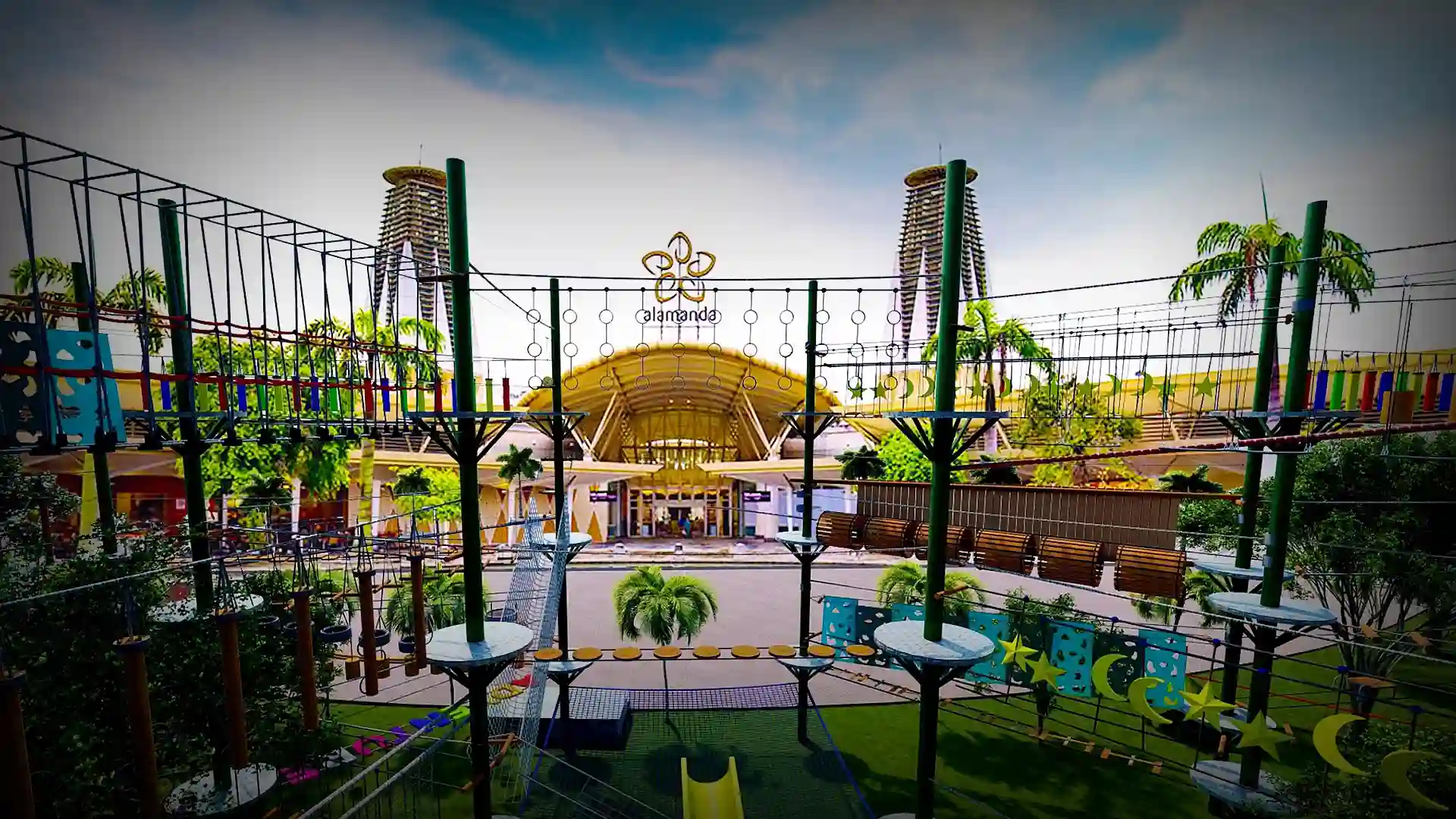
Alamanda Shopping Centre is the oldest and most established shopping mall in Putrajaya, Malaysia’s Federal Territory — the purpose-built administrative capital that houses the prime minister’s office, the cabinet secretariat, the judiciary, and dozens of federal government ministries and agencies.
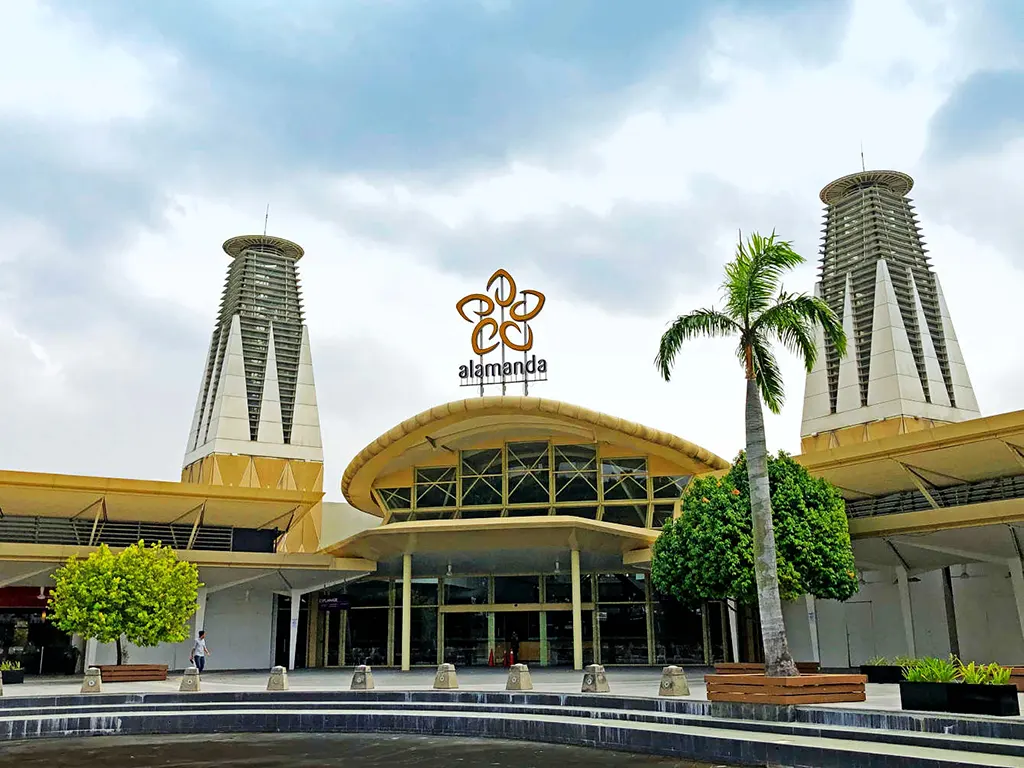
Located in Presint 2 (Precinct 2), Putrajaya’s most densely developed residential and commercial precinct, Alamanda opened its doors in approximately 2005 — serving a dual purpose from the very beginning: to provide practical daily retail services to Putrajaya’s growing civil servant community, and to offer a social gathering point in what was then still a largely empty, newly built city.
Putrajaya was officially named after Malaysia’s first prime minister, Tunku Abdul Rahman Putra Al-Haj — “Putra” from Sanskrit meaning “son” and “jaya” meaning “victorious” or “success,” making Putrajaya literally “victorious people.”
The name was settled in late 1994 and has since become synonymous with Malaysia’s federal governance.
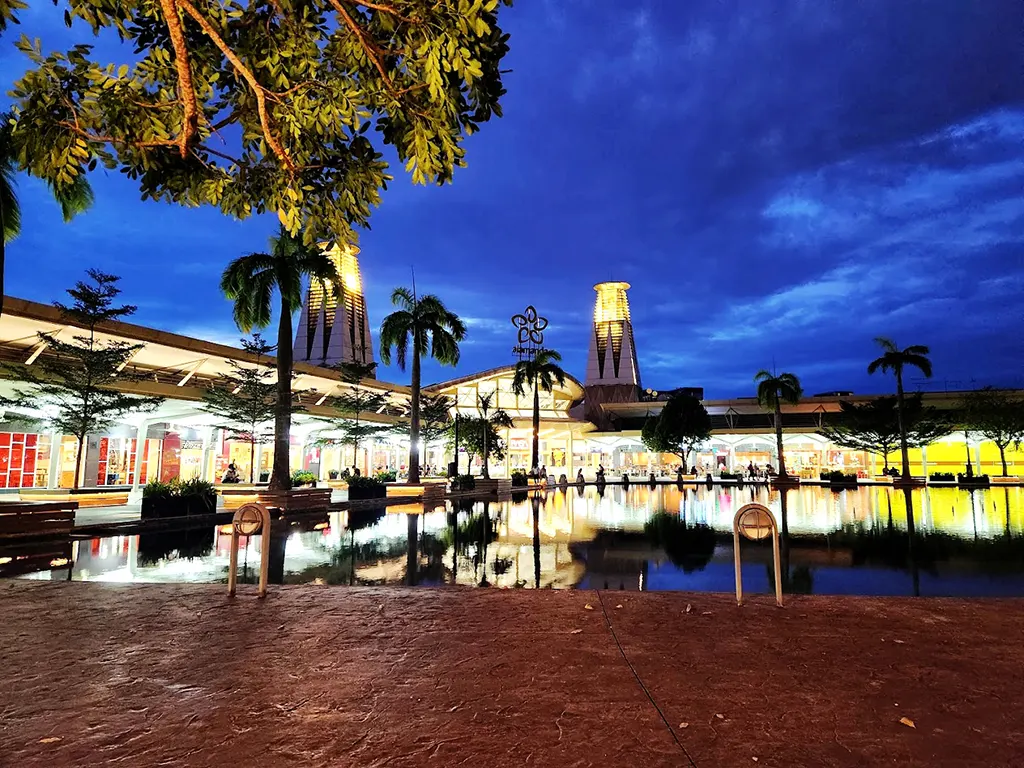
The city’s motto — “Bandar raya Taman, Bandar raya Bestari” (Garden City, Intelligent City) — is reflected in every aspect of Alamanda’s surroundings: wide tree-lined boulevards, lakes, parks, and the extraordinary lakeside mosque that anchors Presint 2.
A planned federal territory established 19 October 1995 (development began August 1995, US$8.1 billion cost), transferred from Selangor to federal jurisdiction on 1 February 2001 as Malaysia’s third federal territory.
Named after Tunku Abdul Rahman — Malaysia’s first prime minister. Government seat moved from KL in 1999; judiciary seat moved in 2003.
Today home to 119,700 residents (Q1 2024) with a Human Development Index of 0.899 — the highest of all Malaysian states and territories.
Location & Developer
Putrajaya Holdings in Presint 2
Alamanda Shopping Centre was developed by Putrajaya Holdings Sdn Bhd (PHSB) — the property development arm of Putrajaya Corporation (Perbadanan Putrajaya), the statutory body charged with developing, managing, and maintaining Putrajaya as a federal territory.
This ownership structure means Alamanda is not merely a commercial venture — it is a component of Putrajaya’s public service infrastructure, designed to support the liveability of the federal government’s administrative city.
Presint 2 (Precinct 2) is one of Putrajaya’s most complete and well-established precincts.
It is home to a large concentration of federal government office complexes, residential apartment blocks for civil servants, and the Putra Mosque (Masjid Putra) — the iconic pink-domed, pink-minareted mosque that sits on the edge of Putrajaya Lake and is one of the most photographed landmarks in Malaysia.
Alamanda sits in the heart of this precinct, directly benefiting from the daily foot traffic of government servants and the tourist traffic generated by Putrajaya’s iconic landmarks.
Putrajaya Holdings Sdn Bhd (PHSB) is the property development subsidiary of Putrajaya Corporation (Perbadanan Putrajaya) — the statutory corporation that serves as the de facto municipal council, landlord, and master developer of Putrajaya.
PHSB’s mandate is to develop commercial and residential property within Putrajaya that supports the federal government administration and serves the growing residential community.
Alamanda Shopping Centre is one of its flagship retail assets, alongside other Putrajaya commercial developments.
Scale, Tenants & Community Role
Alamanda Shopping Centre is best characterised as a community-oriented neighbourhood mall rather than a regional mega-mall.
It serves a defined, loyal catchment — primarily the civil servants, government officers, and their families who live in Presint 2’s apartment blocks and the surrounding precincts.
The mall’s tenant mix reflects this reality: practical, family-oriented retail with a strong emphasis on F&B, grocery, banking, and essential services.
As the first and longest-established mall in Putrajaya, Alamanda holds a special place in the township’s commercial history.
Before Alamanda, Putrajaya’s retail needs were served by small convenience shops, government-run commissaries, and the occasional push-cart market.
Alamanda introduced the concept of a dedicated, air-conditioned retail destination where families could spend a Saturday afternoon — a simple concept that nevertheless transformed daily life in the new capital.
The mall’s community role extends beyond commerce. It serves as a social anchor for the civil servant community — a place where government officers from different ministries gather, where families celebrate birthdays and festive occasions, and where Alamanda’s management has organised community events over the years.
For many Putrajaya residents who have lived in the city since the early 2000s, Alamanda is not just a mall — it is a memory.
The Wider Putrajaya Ecosystem
- 🏛️ Perdana Putra (PM’s Office)
- 🕌 Masjid Putra (Pink Mosque)
- ⚖️ Palace of Justice (Judiciary)
- 🏢 Ministry Complexes
- 🌳 Putrajaya Lake Gardens
- 🌉 Seri Wawasan Bridge
- 🏛️ Putrajaya Corporation Complex
- 🏨 Pullman Putrajaya Lakeside
- 🚇 Putrajaya Sentral (ERL + MRT)
Connectivity
Getting to Alamanda
One of the most remarkable aspects of Putrajaya’s development — and of Alamanda Shopping Centre’s accessibility — is the investment in rail infrastructure connecting the federal capital to the Klang Valley’s wider transport network.
★ By Rail
The Putrajaya & Cyberjaya station — served by the KLIA Transit (Express Rail Link / ERL) — connects Putrajaya directly to Kuala Lumpur Sentral, Bandar Tasik Selatan (for connections to KTM and MRT), and both KLIA and KLIA 2 airports.
The MRT Putrajaya Line (Line 12) also serves Putrajaya via Putrajaya Sentral MRT Station, connecting the city to the Klang Valley MRT network via the Kwasa Damansara–Kajang corridor.
★ By Road
The North–South Expressway Central Link (ELITE / E6) is the primary highway connection from Kuala Lumpur and the Klang Valley to Putrajaya — exiting at the Putrajaya Toll Plaza.
The Maju Expressway (MEX / E18) runs from Kuala Lumpur’s southern district through Putrajaya, with an interchange serving Presint 2 directly.
The Putrajaya – Cyberjaya Expressway (FT29) links Putrajaya to neighbouring Cyberjaya and the DPEK (Damansara – Puchong) expressway network.
★ From KLIA / KLIA2
The KLIA Transit ERL service connects KLIA to Putrajaya & Cyberjaya station in approximately 28 minutes — making Alamanda accessible to international business travellers with meetings in the federal government ministries
Putrajaya’s Government Architecture
& the Civil Servant Community
The development of Putrajaya was driven by Malaysia’s fourth prime minister, Tan Sri Mahathir Mohamad, who first conceived the idea in the late 1980s — a laboratory for a new form of electronic government that would emphasise the adoption of digital communications.
The establishment of the city began in August 1995 and was completed at an estimated cost of US$8.1 billion.
The first prime minister after whom the city is named, Tunku Abdul Rahman, would have witnessed with pride the transformation of the former Prang Besar rubber estate — founded in 1921 by British World War I veterans — into one of Southeast Asia’s most ambitious planned cities.
The civil servants who moved to Putrajaya in the early 2000s — many relocating from Kuala Lumpur under transfer orders — formed the backbone of Alamanda’s original and most loyal customer base.
These officers and their families shaped Alamanda’s culture as a community mall: a place that understood and catered to the rhythms of government office hours, school holidays, and the unique social fabric of Putrajaya’s multiracial, educated middle-class residential community.
Key Facts at a Glance
| Address | Presint 2, Putrajaya, Federal Territory, Malaysia |
|---|---|
| Coordinates | Approximately 2.931°N, 101.685°E |
| Developer | Putrajaya Holdings Sdn Bhd (PHSB) — subsidiary of Putrajaya Corporation |
| Opening Year | Approximately 2005 |
| Mall Type | Community neighbourhood shopping centre |
| Parent Precinct | Presint 2 (Precinct 2), Putrajaya |
| Nearby Landmarks | Masjid Putra (Putra Mosque), Putrajaya Lake |
| Nearest ERL Station | Putrajaya & Cyberjaya (KLIA Transit / ERL) |
| Nearest MRT Station | Putrajaya Sentral (MRT Putrajaya Line) |
| Major Highways | ELITE (E6) · MEX (E18) · FT29 Putrajaya–Cyberjaya |
| City Population | 119,700 (Q1 2024) |
| HDI | 0.899 — #1 in Malaysia |
| FT Status | Federal Territory of Putrajaya (est. 1 February 2001) |
| Website | www.alamanda.com.my |
Conclusion
Alamanda Shopping Centre occupies a unique position in Malaysian retail history.
It is not the largest mall in Greater Kuala Lumpur. It is not the most architecturally celebrated.
But it is the first and longest-serving retail destination in Malaysia’s Federal Territory of Putrajaya — and in that specificity lies its significance.
Developed by Putrajaya Holdings as part of the infrastructure of the federal capital, Alamanda was designed to serve a very specific community: the civil servants, government officers, and their families who moved to Putrajaya from 1999 onwards to work in the ministries and government complexes that make Malaysia function.
For this community, Alamanda was not just convenient — it was transformative. It gave them a place to buy groceries, eat together, bank, shop, and gather as a community — exactly as a mall should.
Sitting in the heart of Presint 2, within walking distance of the Putra Mosque and the ministries of the federal government, Alamanda is both a practical retail centre and a social institution in a city that is still relatively young.
The fact that its official website has lapsed is, in some ways, a testament to its established, settled nature — it does not need aggressive digital marketing when it has 20 years of loyal customers who know exactly where to find it.
Putrajaya aspires to be the Garden City and Intelligent City.
Alamanda is the quiet retail heartbeat of that aspiration — serving the people who make Malaysia’s federal government work, one Saturday afternoon at a time.