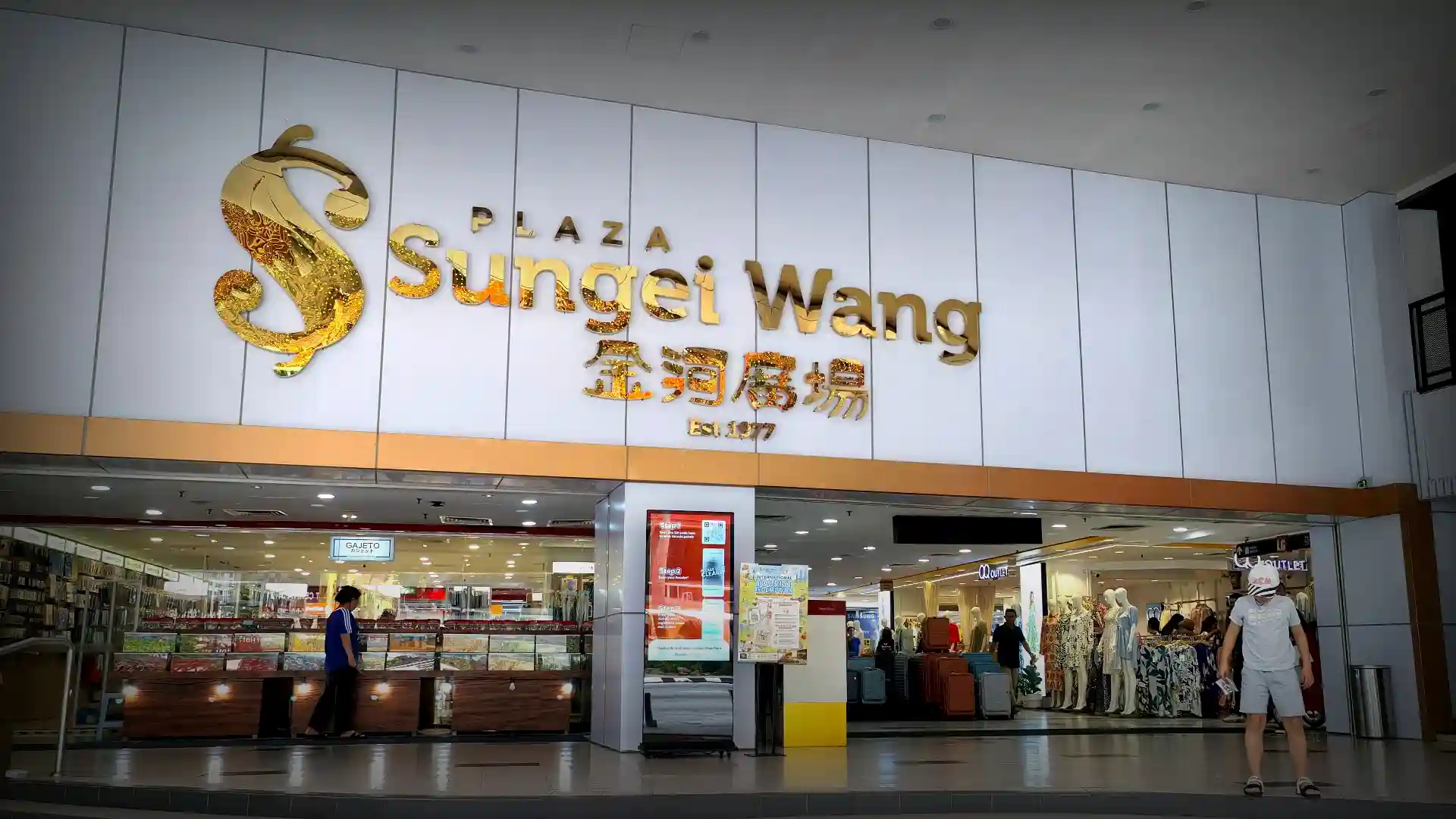
In the glittering heart of Kuala Lumpur’s most celebrated shopping district, where glitzy megamalls and luxury boutiques line every corner, one retail institution has quietly and stubbornly held its ground for nearly five decades.
Sungei Wang Plaza, or Plaza Sungei Wang as it is officially known, stands as one of Bukit Bintang’s oldest and most distinctive shopping destinations — a strata-title mall that has survived economic upheavals, shifting consumer tastes, and the rise of glittering competitors.
Far from being a relic of a bygone era, this 700-shop complex has reinvented itself repeatedly, earning a devoted following among bargain hunters, fashion enthusiasts, and those who appreciate the chaotic charm of an authentic Malaysian marketplace under one roof.
Roots in Bukit Bintang’s History
Before Sungei Wang Plaza rose from its foundations in 1977, the land occupied by what is now the bustling mall was once Bukit Bintang Park, a tranquil green space in Kuala Lumpur’s most vibrant district.
The Sungei Wang Plaza Sdn Bhd was incorporated on 16 May 1972, with construction beginning shortly thereafter and the mall finally opening for business in January 1977.
Built at a cost of RM 100 million, it was among the earliest purpose-built shopping complexes in the Bukit Bintang area, at a time when such retail destinations were still a novelty in Malaysia.
Its establishment signaled the transformation of Bukit Bintang from a colonial-era hill station and park into the commercial powerhouse it is today.
The name “Sungei Wang,” derived from the nearby Gombak River, reflects the mall’s deep connection to Kuala Lumpur’s geographic and cultural landscape.
For decades following its opening, it served as the primary shopping destination for Kuala Lumpur residents and visitors alike, offering an unprecedented variety of retail options under one roof during an era when such retail abundance was still remarkable in Malaysia.
The Strata-Title Model: A Unique Retail Identity
What sets Sungei Wang Plaza apart from most shopping malls in Malaysia is its strata-title structure.
Rather than being owned and managed by a single entity, individual units within the mall are owned by hundreds of different investors, each holding their own title.
This unique ownership model has profoundly shaped the mall’s character, creating a vibrant ecosystem of independent retailers who have full autonomy over their spaces.
The largest single shareholder is Capitaland Malaysia Mall Trust (CMMT), which owns approximately 62% of the mall, while the remaining shares are distributed among thousands of individual unit owners.
This fragmented ownership structure presents both challenges and advantages.
On one hand, coordinating renovations, maintaining a cohesive tenant mix, and implementing upgrades across hundreds of independent owners requires significant effort and diplomacy.
On the other hand, the strata-title model has fostered an incredibly diverse and dynamic retail environment.
Each shop owner operates independently, set their own prices, and can pivot quickly to trending products and styles—something that is far more difficult in centrally-managed malls.
This entrepreneurial spirit has made Sungei Wang Plaza a haven for bargain hunters who know that persistence and negotiation can yield remarkable deals.
A Shopper’s Paradise: Retail Diversity
Spanning approximately 800,000 square feet of retail floor area across eight shopping levels and three basement parking floors, Sungei Wang Plaza houses over 700 shops and service outlets.
The mall’s tenant mix has evolved significantly over the decades, but it has always maintained its reputation as a destination for affordable fashion, accessories, electronics, and lifestyle products.
Unlike the polished luxury boutiques that dominate newer developments nearby, Sungei Wang Plaza embraces a more democratic and eclectic approach to retail, making it accessible to shoppers from all walks of life.
Anchor tenants have included well-known names such as Giant Hypermarket (now Cold Storage following Tesco’s exit from Malaysia), Daiso with its famed 100-yen style household products, and MR.DIY for affordable home improvement and lifestyle goods.
The mall also features more experiential tenants, including Blastacars—a thrilling four-lane drift car experience — and Camp5, one of Kuala Lumpur’s most popular indoor bouldering and climbing gyms.
The JUMPA@Sungei Wang concept, launched as part of the mall’s major refurbishment, transformed the five-storey annex block into a modern family entertainment and lifestyle zone.
The Golden Transformation: Modern Revival
Like many aging malls in competitive retail environments, Sungei Wang Plaza has faced periods of declining foot traffic and occupancy challenges.
However, rather than succumbing to obsolescence, the mall has periodically reinvented itself through significant refurbishment and rebranding initiatives.
Major renovations took place in 1992 and 2013, each bringing updated interiors, improved facilities, and refreshed tenant offerings.
The most dramatic transformation came in 2018–2019, when CMMT undertook an ambitious asset enhancement initiative (AEI) valued at over RM 80 million.
The centrepiece of this upgrade was a stunning new façade clad in glistening gold aluminium panels—a bold aesthetic statement that instantly distinguished Sungei Wang Plaza from its neighbours.
Complementing the golden cladding, a large 3D-patterned LED screen was installed on the main entrance, creating mesmerising light displays during the day and transforming the building into a luminous beacon at night.
The management described the effect as the screen forming “certain patterns during dawn and dusk,” giving the 41-year-old mall a thoroughly modern identity while paying homage to the gold that has long symbolised prosperity in Malaysian culture.
Strategic Connectivity in the Heart of the City
One of Sungei Wang Plaza’s most enduring advantages is its exceptional location and connectivity.
The mall sits directly along Jalan Bukit Bintang, the main artery of Kuala Lumpur’s retail and entertainment corridor, and is accessible via direct covered walkways from both the Bukit Bintang MRT station on the Kajang Line and the Bukit Bintang Monorail station.
This seamless integration with Kuala Lumpur’s public transportation network ensures a steady stream of commuters and tourists throughout the day, making the mall a natural stop on any Bukit Bintang itinerary.
The mall’s surrounding neighbourhood further enhances its appeal. Nestled within walking distance of Pavilion Kuala Lumpur, Lot 10, Fahrenheit 88, and the prestigious Kuala Lumpur City Centre, Sungei Wang Plaza benefits from the overflow of visitors drawn to the area by its more famous neighbours.
Its affordability relative to adjacent luxury malls makes it an attractive complement to the high-end shopping experience, allowing visitors to explore a full spectrum of retail possibilities within a single walk through Bukit Bintang.
An Enduring Legacy
Despite facing an occupancy rate challenge typical of older strata-title properties, Sungei Wang Plaza has demonstrated remarkable resilience.
With average monthly footfall exceeding one million visitors and a dedicated management committee supported by professional firms like Knight Frank Malaysia, the mall has outlined strategic plans to optimise the tenant mix on each level, attracting complementary businesses that enhance the overall shopping experience.
The story of Sungei Wang Plaza is ultimately a story of adaptation and endurance.
It is a mall that has watched its neighbourhood transform from colonial-era parkland into Southeast Asia’s most celebrated shopping district, surviving the entry of global retail giants, economic recessions, and the digital commerce revolution.
Its strata-title structure, which could have been a source of fragmentation and decline, has instead become a strength — enabling the kind of independent, entrepreneurial retail diversity that no centrally-managed megamall can replicate.